 Loading... Please wait...


Categories
Best Mattresses for Bunk Beds: Size, Thickness & Comfort Guide
Posted by Posted by OCFurniture on 2nd Sep 2026
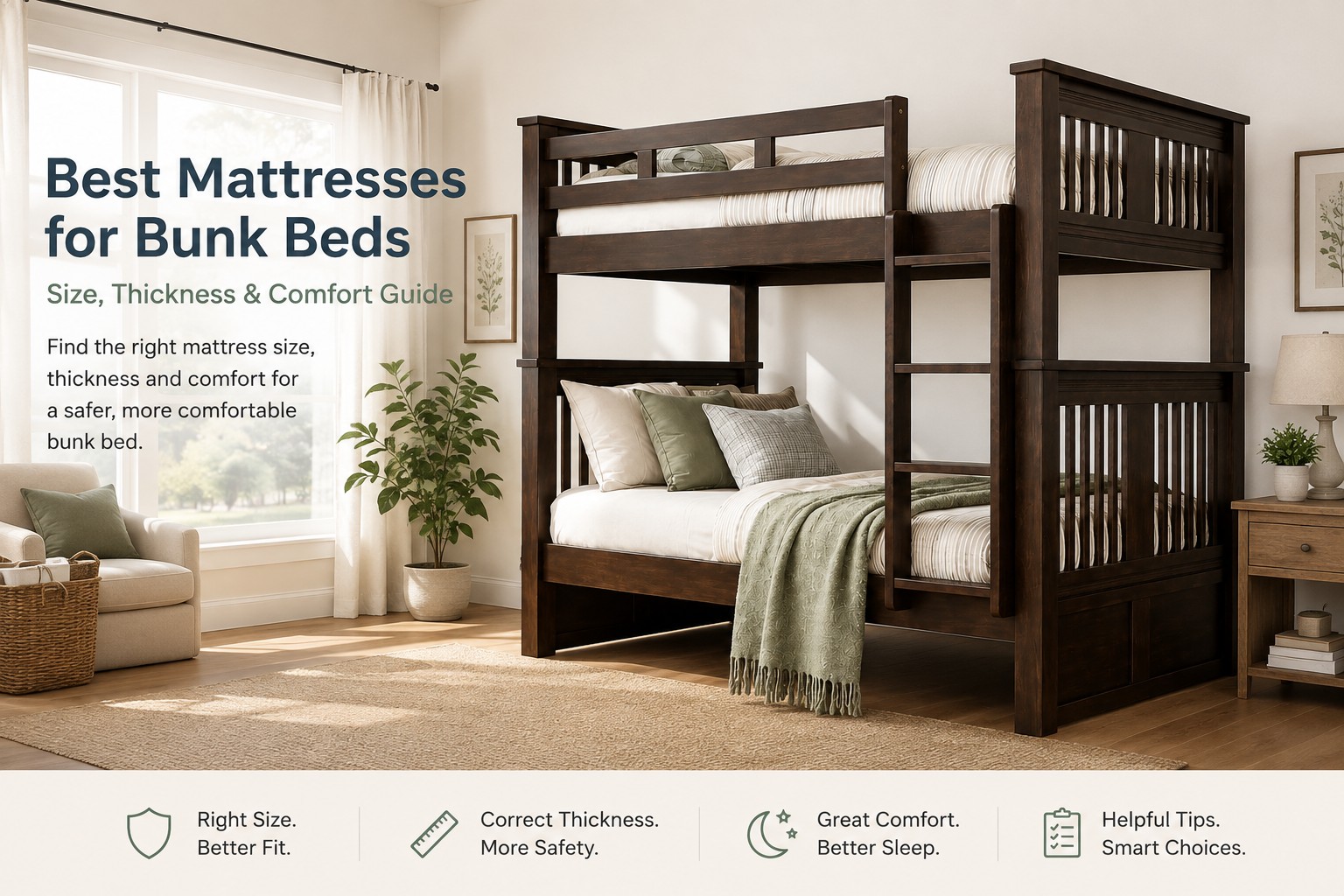
Buying a mattress for a bunk bed is a little different from buying a mattress for a regular bed.
Size matters, but so does thickness. A mattress that is comfortable on a conventional bed may be too thick for an upper bunk, reducing the usable height of the guardrails. And if you already own a bunk bed, it is important to confirm whether you need a Twin, Twin XL, Full, Full XL, or Queen mattress before ordering.
Whether you are buying mattresses for a new bunk bed or replacing mattresses on bunk beds you purchased years ago, or purchased somewhere else, this guide will help you choose the right size, thickness, and comfort level.
Why Mattress Thickness Matters on a Bunk Bed
One of the most important considerations when choosing a bunk bed mattress is its thickness.
The upper bunk is surrounded by guardrails designed to extend above the sleeping surface. As mattress thickness increases, the amount of guardrail extending above the mattress decreases.
For this reason, an 8-inch mattress is a practical choice for many bunk beds. It provides enough depth for comfortable support while maintaining the lower profile commonly required for an upper bunk.
However, always check the mattress-thickness requirement specified by the manufacturer of your particular bunk bed. Some models may have different limitations.
A thicker mattress is not automatically a better mattress for a bunk bed. On an upper bunk, the correct profile is just as important as comfort.
Already Own a Bunk Bed? Start by Checking the Mattress Size
We regularly speak with customers who already own bunk beds and simply need new mattresses.
You do not need to have purchased your bunk bed from OC Furniture to purchase bunk bed mattresses from us.
Before ordering, however, verify the mattress size required by your bed rather than relying on how the mattress looks or what you remember purchasing.
The most common bunk bed mattress sizes include:
Twin: Approximately 38" x 75"
Twin XL: Approximately 38" x 80"
Full: Approximately 54" x 75"
Full XL: Approximately 54" x 80"
Queen: Approximately 60" x 80"
The five-inch difference between a standard Twin and Twin XL, or between Full and Full XL, is easy to overlook, but it matters.
A standard Twin mattress placed on a Twin XL bunk will leave approximately five inches of unused length. The same problem occurs when a standard Full mattress is used on a Full XL bed.
If you are unsure which size you own, measure the sleeping area before purchasing your mattress.
Twin vs. Twin XL Bunk Bed Mattresses
Twin and Twin XL mattresses have approximately the same width, but a Twin XL provides an additional five inches of length.
That extra length can make a noticeable difference for teenagers and adults.
Standard Twin mattresses remain a popular choice for children's bunk beds and rooms where maximizing floor space is important. Twin XL mattresses are often preferred for taller teenagers, adults, guest rooms, vacation homes, and other situations where the bunk bed will be used for many years.
Do not assume that every narrow bunk bed uses a standard Twin mattress. Many heavy-duty and adult bunk beds are specifically designed for Twin XL mattresses.
Full vs. Full XL Mattresses
The same distinction applies to Full and Full XL mattresses.
A standard Full mattress is approximately 75 inches long, while a Full XL is approximately 80 inches long.
Full XL is less common than standard Full in conventional bedroom furniture, so it is especially important to check your bunk bed specifications before purchasing.
If your bunk bed requires Full XL, substituting a standard Full mattress will leave a noticeable gap at the end of the sleeping surface.
What Mattress Is Best for an Adult Bunk Bed?
Adult bunk beds place greater emphasis on mattress support and comfort because the sleeper is typically heavier and may use the bed every night.
A low-profile mattress does not necessarily mean sacrificing comfort.
Modern 8-inch mattresses can incorporate pocketed coils, comfort foam, memory foam, or hybrid construction to provide substantial support within a relatively low profile.
For adults, consider:
- The sleeper's preferred firmness
- Coil or hybrid construction
- Edge support
- Mattress durability
- Whether the bed will be used occasionally or every night
- The bunk bed manufacturer's maximum mattress thickness
The bunk bed itself should also be designed and rated appropriately for adult use. A good mattress cannot compensate for a bed frame that was designed primarily for small children.
Medium Firm or Plush: Which Is Better?
There is no single firmness level that is best for every bunk bed.
The choice between medium firm and plush is primarily a matter of comfort and intended use.
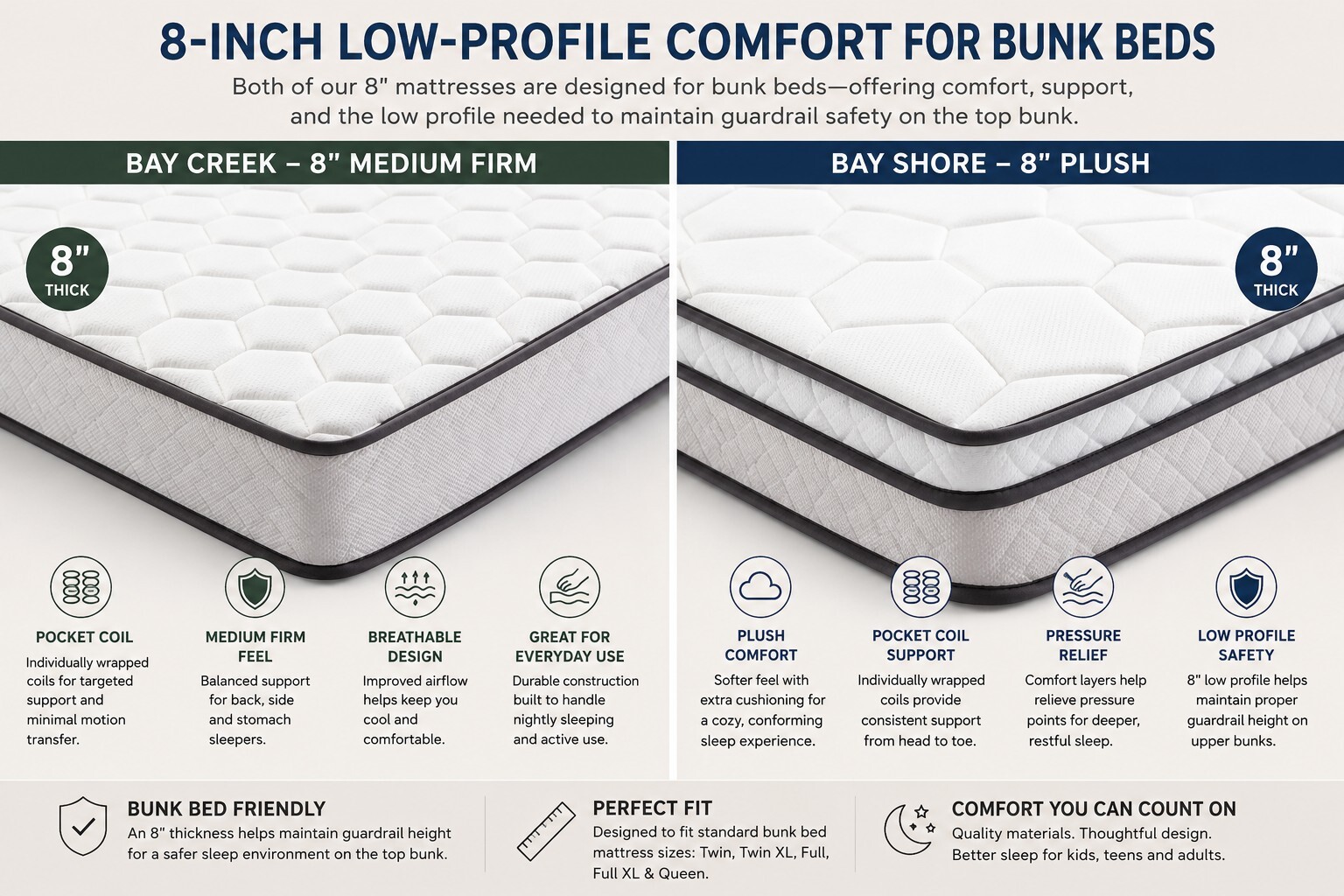
A medium-firm mattress provides a more stable, supportive feel and can be a good choice for adults, back sleepers, guest rooms, and high-use applications.
A plush mattress provides additional cushioning and pressure relief for sleepers who prefer a softer sleeping surface.
For bunk beds, the important point is that you can choose the comfort level you prefer without unnecessarily increasing mattress thickness.
A well-designed 8-inch mattress can still provide meaningful comfort and support.
What About the Bottom Bunk?
The upper mattress receives the most attention because guardrail height is a safety consideration, but the lower mattress deserves some thought as well.
Some bunk beds allow a thicker mattress on the lower bed, while others work best when both mattresses have similar profiles.
A thicker lower mattress can also reduce the amount of sitting and sleeping headroom between the bunks.
Before increasing the thickness of the lower mattress, consider both the manufacturer's specifications and the amount of space you want between the lower mattress and the upper bunk.
For many bunk bed configurations, using low-profile mattresses on both levels creates a cleaner fit and preserves more usable space.
Don't Forget About Trundle Mattresses
If your bunk bed includes a pull-out trundle, mattress thickness becomes even more important.
The trundle must be able to roll completely underneath the bed when the mattress is installed. A mattress that is too thick can prevent the trundle from closing properly.
Many trundles require mattresses approximately 8 inches thick or less, but requirements vary by model.
Also confirm the required trundle size. Depending on the bunk bed, a trundle may require a Twin, Twin XL, Full, or Full XL mattress. Measure and verify before ordering.
How to Measure Your Bunk Bed Before Buying a Mattress
If you don't have the original specifications for your bunk bed, measuring the sleeping area can help determine what you need.
Measure the usable mattress area from inside the bed frame, including both length and width.
Then compare those measurements with standard mattress dimensions.
Pay particular attention to length. That is where Twin versus Twin XL and Full versus Full XL mistakes frequently occur.
Also measure the available mattress depth on the upper bunk and look for any mattress-height marking or warning label supplied by the bunk bed manufacturer.
If you still aren't sure, contact a bunk bed or mattress specialist before ordering. A few minutes spent confirming the size can prevent the inconvenience of purchasing the wrong mattresses.
Common Bunk Bed Mattress Buying Mistakes
One of the most common mistakes is assuming that thicker always means more comfortable. For an upper bunk, excessive thickness can reduce the effective height of the guardrails.
Another common mistake is confusing Twin with Twin XL or Full with Full XL.
Other mistakes include purchasing a mattress without checking the bunk bed manufacturer's maximum mattress thickness, overlooking the mattress requirements for a trundle, and buying an adult mattress without considering whether the bunk bed itself is designed for adult use.
The best approach is simple:
Confirm the size. Confirm the allowable thickness. Then choose the comfort level. In that order.
Buying Mattresses for Bunk Beds Purchased Somewhere Else
You may already have the bunk beds you need.
Maybe you purchased them online, inherited them, moved them from another home, bought them several years ago, or purchased them from another furniture retailer.
That's not a problem.
At OC Furniture, we can help customers find replacement mattresses for bunk beds regardless of where the bunk bed was originally purchased.
If you know the required mattress size and maximum thickness, choosing a replacement is straightforward.
If you're uncertain, measure the sleeping area or check the manufacturer's specifications before purchasing.
Bunk Bed Mattresses in Orange County & Southern California
OC Furniture offers 8-inch low-profile mattresses suitable for many bunk bed applications, with choices for sleepers who prefer either a plush or more supportive medium-firm feel.
Our medium-firm pocket coil mattress is available in Twin, Twin XL, Full, Full XL, and Queen, making it especially useful for the less-common XL bunk bed sizes that can sometimes be difficult to find locally.
Customers throughout Orange County, Los Angeles, and Southern California can shop our selection of Mattresses for Bunk Beds, and local customers can contact us regarding delivery or warehouse pickup.
If you are also shopping for the bed itself, explore our Bunk Beds, Adult Bunk Beds, Twin XL Bunk Beds, and Queen Bunk Beds collections.
Customers who would rather see our heavy-duty bunk beds in person can also visit our Orange County Furniture Showroom.
Final Thoughts
The best mattress for a bunk bed isn't necessarily the thickest or most expensive mattress.
It is the mattress that properly fits the bed, stays within the manufacturer's thickness requirements, provides the appropriate support for the sleeper, and offers the comfort level you prefer.
For many bunk beds, an 8-inch mattress provides an excellent balance between comfort, support, and maintaining a practical low profile.
And if you already own your bunk beds, there's no reason to replace the beds just because you need new mattresses.
Measure the bed, confirm the size and thickness requirements, and choose the mattress that fits both the bunk bed and the person sleeping on it.
Frequently Asked Questions
What thickness mattress is best for a bunk bed?
An 8-inch mattress is a practical choice for many bunk beds because it provides comfort and support while maintaining a relatively low profile. Always follow the maximum mattress thickness specified by your bunk bed manufacturer, particularly for the upper bunk.
Can I use a regular mattress on a bunk bed?
Yes, provided the mattress is the correct length and width and does not exceed the maximum thickness specified for the bunk bed. Mattress thickness is particularly important on the upper bunk because it affects the amount of guardrail extending above the mattress.
Can adults sleep on an 8-inch mattress?
Yes. Mattress thickness alone does not determine whether a mattress can comfortably support an adult. Construction, coil system, foam layers, firmness, and overall support are also important.
How do I know if my bunk bed requires Twin or Twin XL?
Measure the usable mattress area or check the manufacturer's specifications. A standard Twin mattress is approximately 75 inches long, while a Twin XL is approximately 80 inches long.
What is the difference between Full and Full XL?
Both have approximately the same width, but Full XL is about five inches longer. Standard Full is approximately 54" x 75", while Full XL is approximately 54" x 80".
Can I buy mattresses from OC Furniture if I bought my bunk bed somewhere else?
Yes. You do not need to have purchased your bunk bed from OC Furniture. Confirm the required mattress size and maximum thickness for your existing bunk bed before ordering.
What mattress thickness should I use for a bunk bed trundle?
Many bunk bed trundles require a low-profile mattress approximately 8 inches thick or less so the trundle can roll underneath the bed. Always verify the requirements for your particular trundle before purchasing.
Recent Posts
- » Best Mattresses for Bunk Beds: Size, Thickness & Comfort Guide
- » Heavy-Duty Bunk Beds in Orange County: A Local Buying Guide
- » Queen Bunk Beds in Southern California: The Ultimate Guide for Adults (2026)
- » Adult Bunk Beds in Southern California: Space-Saving Solutions for Modern Living (2026)
- » Farmhouse Bunk Beds: Rustic Charm Meets Smart Space-Saving Design